

 Showcasing Harper Adams at the UKACT Annual Conference 2026
By Dr Ellen Williams "Harper Adams are very well represented this year, aren’t they?"What a fabulous thing to hear at the UKACT A …
Posted 28 August
Showcasing Harper Adams at the UKACT Annual Conference 2026
By Dr Ellen Williams "Harper Adams are very well represented this year, aren’t they?"What a fabulous thing to hear at the UKACT A …
Posted 28 August
Delivering the first joint ABWAK and UKACT workshop, with Wild Welfare
18 September 2026
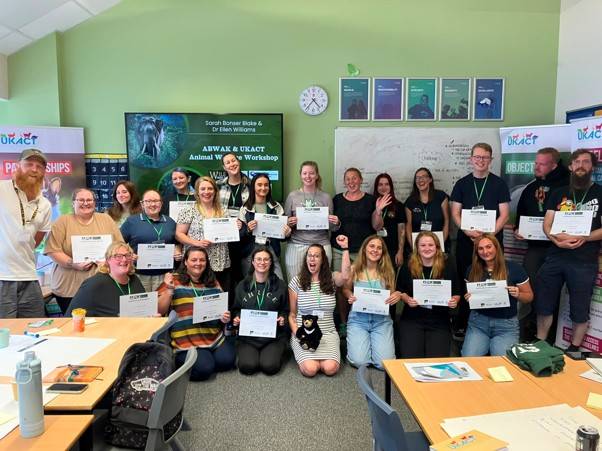
August saw an exciting opportunity for me to co-deliver a workshop on animal welfare in zoos. Sarah Bonser-Blake, the Animal Welfare Field Manager from Wild Welfare, had started chatting about this idea at the UK Animal Care Technicians (UKACT) conference last year.
Fast forward 12 months and we were finally in a position to host the workshop, at Reaseheath College in Cheshire.
We were especially excited as this was the first time that the Association of British Wild Animal Keepers (ABWAK) and UKACT had co-developed a workshop, so it was a bit of a trial to see whether that bought additional cross-sector benefits. It definitely seemed to, and we are hoping to be able to do more in the future!
We were delighted to be joined by more than 20 extremely enthusiastic animal care professionals, representing 13 different facilities. There was a good variety of background in the room, including colleagues working in zoos, aquariums, colleges and farm parks. Having this diversity was really key to some fruitful discussions during the day.
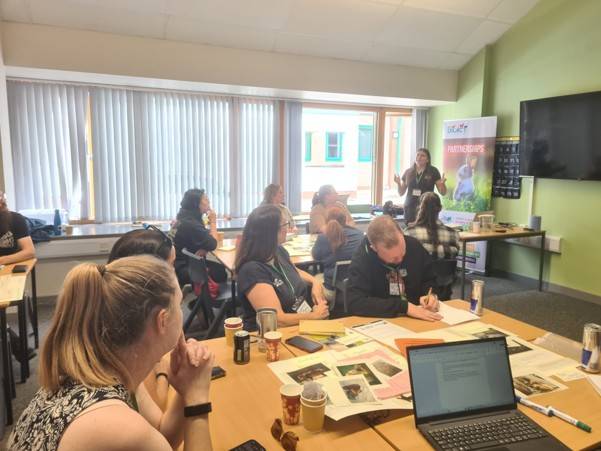
The aim of the workshop was to de-mystify the process of welfare assessments in zoos. We wanted to support practioners to translate theory into practice, building confidence in undertaking welfare assessments and identifying (and working through) challenges that are commonly faced.
The session was a mixture of theory and practical work. We started with a lecture from Sarah on the difference between care and welfare in zoos. So often we merge the two concepts, when they mean very different things to animals. We need to ensure that we are differentiating what we give to the animals and what that means to the animals.
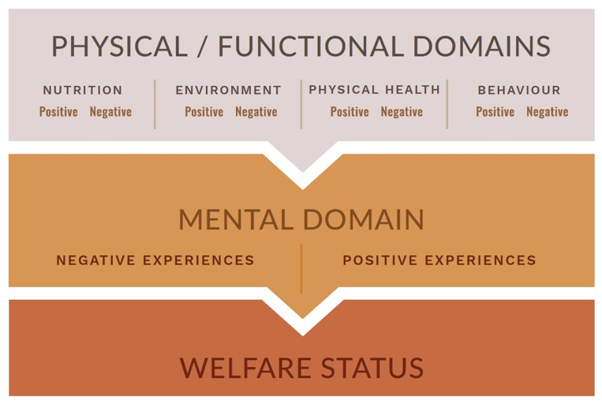
The 5 domains model of animal welfare, developed by David Mellor and colleagues, that shows inputs (i.e. aspects of animal care) and outputs (i.e. animal experiences)
This led nicely onto an on how we can apply the 5 domains model in zoos. During this phase lots of the discussion was actually around how interlinked the 5 domains are when it comes to animal experiences, which nicely reflected the importance of considering all aspects of animal experiences.
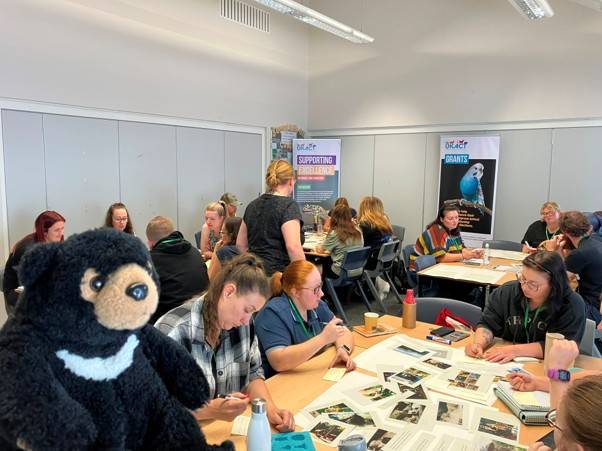
Considering the different elements of the 5 domains framework when it comes to animal management – being carefully watched over by Amu (named after a bear that Sarah met in Japan!)
The last task before lunch was a short discussion on what is currently being done within the facilities that delegates had come from, and challenges they faced within those facilities. What this exercise flagged is that actually what we refer to as welfare assessment is really variable, and that people vary in the confidence levels they have in the methods they are using, and that the challenges that are being experienced are common across the industry. As the old saying goes, a problem shared is a problem halved, and I think the important thing here was for everyone in the room to recognise they were not alone in regards challenges, particularly things such as time, money and staff training. The other important thing to recognise is that many of these challenges are not insurmountable!
After serious brain work, it was time for a well earned lunch break. Alan from Safe4 had kindly sponsored the event which meant we were treated to a huge spread. Domain 1 was very much met for all of us!
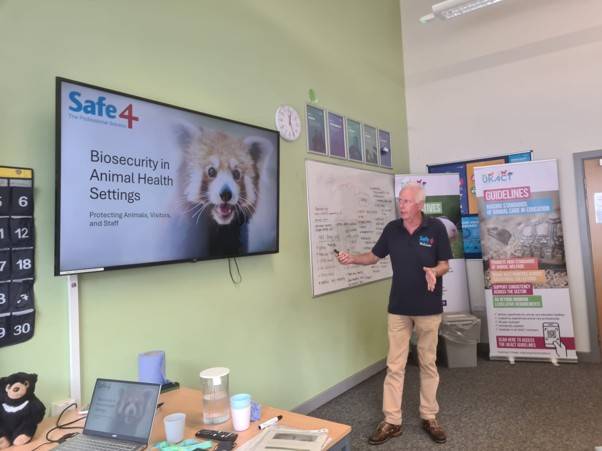
Alan giving us a short presentation on biosecurity
For the afternoon we wanted to focus on applying the theory we had covered. Sarah introduced the group to the Wild Welfare welfare assessment tool and the two species we were to look at – blue and gold macaw and African spurred tortoises.
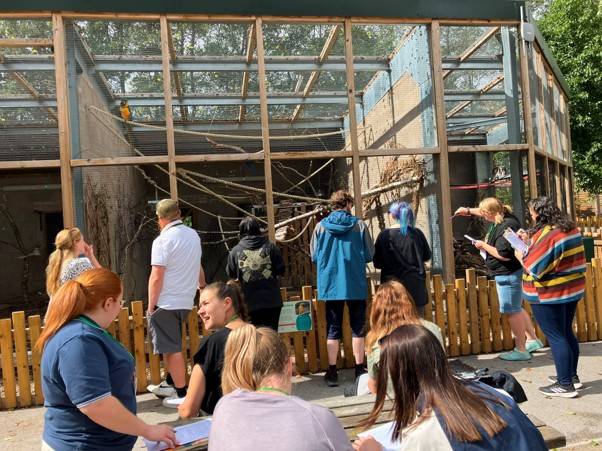
Monitoring the blue and gold macaw, and also having lots of really interesting discussions about how we should apply welfare assessments in zoos
Despite the UK being in a heat wave for what feels like the last 6 months, we did manage to happen upon torrential rain during the workshop, but by luck rather than judgement we somehow avoided this during the afternoon practical session!
Back in the classroom we debriefed and spent time reflecting on what personal actions delegates could take to overcome some of the challenges they faced in their own collections. Having the opportunity to have open discussions was really valuable, and the benefits of combining academic research and lived experience was clear to see. We moved on to ideas for how to actually use welfare assessment data to drive welfare change – making sure that we aren’t just keeping records but that we are actually engaging with them to ensure animal welfare is prioritised in our management.
Sarah said: "The workshop was an opportunity to get everyone on the same page in terms of animal welfare understanding. After that, we can focus on using that knowledge to push forward changes which really make an impact for positive animal welfare outcomes. It was marvellous to witness that increase in both understanding and confidence among the delegates. The wonderful collaboration between UKACT, ABWAK AND Wild Welfare was the cherry on top!"
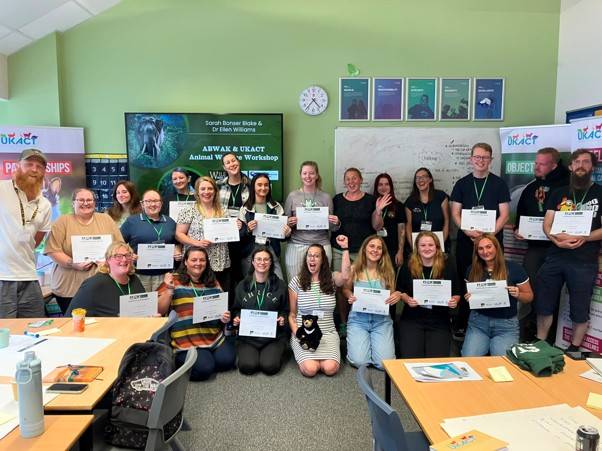
A final cheer! Certificates were given out to all attendees before everyone made their way home
Huge thanks to my co-host Sarah Bonser Blake, James Cork, Joe Cooke and Reaseheath Mini Zoo for helping to make this workshop a huge success. I was really privileged to have the opportunity to undertake this collaboration, and hope to be able to do more of the same in the future!
You can read more about the day in the Wild Welfare press release and see more here:
Related Posts
Showcasing Harper Adams at the UKACT Annual Conference 2026
By Dr Ellen Williams "Harper Adams are very well represented this year, aren’t they?"What a fabulous thing to hear at the UKACT A …
Posted 28 August
 Confused meerkat or sleek workshop host? A look into the BIAZA research conference 2026
By Dr Ellen Williams As a Professional Member of the British and Irish Association of Zoos and Aquariums (BIAZA) and a Member of their …
Posted 24 July
Confused meerkat or sleek workshop host? A look into the BIAZA research conference 2026
By Dr Ellen Williams As a Professional Member of the British and Irish Association of Zoos and Aquariums (BIAZA) and a Member of their …
Posted 24 July
 Harper Adams colleagues forge research links with Halesowen College
Four members of the Animal Behaviour and Welfare Research Group (Dr Holly Vickery, Dr Ellen Williams, Jen Sadler and Alice King) had an exci …
Posted 22 June
Harper Adams colleagues forge research links with Halesowen College
Four members of the Animal Behaviour and Welfare Research Group (Dr Holly Vickery, Dr Ellen Williams, Jen Sadler and Alice King) had an exci …
Posted 22 June
 A 'good life' for pigs - and other exciting animal science research at BISAS 2026
Dr Holly Vickery attended the British and Irish Society of Animal Science (BISAS) Annual Conference in April. She has written about her …
Posted 3 June
A 'good life' for pigs - and other exciting animal science research at BISAS 2026
Dr Holly Vickery attended the British and Irish Society of Animal Science (BISAS) Annual Conference in April. She has written about her …
Posted 3 June